AI-Powered Mental Health Infrastructure — built in one afternoon.
An agentic personal system designed around actual failure points — ADHD, depressive episodes, caregiving — instead of aspirational productivity. Five entity types, three protocols, and a lock that protects you from your own data on the days you'd weaponize it against yourself.
"I have ADHD. I experience depressive episodes. I have a profoundly autistic son. And I've spent years building systems that help other people navigate complexity, while my own life fell through the cracks of every productivity tool I ever tried. Eventually it stopped being funny — so I built my own."
A personal system designed for the brain I actually have.
15.5 million U.S. adults live with diagnosed ADHD. Between 18.6% and 53.3% of them also experience depression. Meanwhile, productivity apps see a 30-day retention rate of 4.1%. The supposed solution is failing the people who need it most.
Quinn isn't a productivity app. She's a personal system layer between my brain and my commitments — captured by voice or text, classified silently in the background, and protected against my own worst instincts during depressive episodes.
I'm a product leader who builds workflow tools for a living. I still couldn't maintain a productivity system for myself for more than three weeks. The reason wasn't discipline — it was design. Every tool I tried was built for a brain that works differently than mine.
Map your actual failure points. Not the aspirational ones.
Before I touched a single tool, I spent time on an uncomfortable question: what are my actual failure points? These four observations became the design requirements that every feature of Quinn maps back to.
Commitments leave my mouth, then float away before they can anchor. Not negligence — neurology. The system has to catch them at the moment they're spoken.
Depressive episodes don't announce themselves on the calendar. Hard care days don't block off time. The system needs to know about these states and change its behavior accordingly.
If the system asks me to categorize, tag, or organize at the moment of input, I will abandon it within days. The input window must be zero-friction.
During depressive episodes, completion rates become verdicts. The system needs protection against the user's worst instincts — even (especially) when that user is me.
Not everything is a task.
The first architectural decision: Quinn classifies incoming information into five distinct entity types rather than dumping everything into a single task list. Tasks are one of five things — not the default container for everything.
A promise made to someone. Has emotional weight. Tracked differently.
Ambient situational information. Reweights everything else.
Something to do. No emotional charge. Standard execution.
A creative spark to hold. Not to action — just to keep.
A win you're proud of. Self-generated. Found when you need it most.
The headpat category deserves its own paragraph. Most productivity systems accidentally reinforce people-pleasing — the dopamine hit ties to completing tasks, which are almost always things done for someone else. The headpat inverts that. The wins captured are yours. Self-generated, self-directed, independent of external validation. For anyone who's experienced the ADHD-adjacent loop of approval-seeking as a learned response to chronic underperformance, this isn't a small design choice. It's a therapeutic one.
Three emergency modes — designed before anything was built.
Each protocol fundamentally changes what Quinn surfaces and how she behaves. They exist because without them, the system would be useless on the days I needed it most.
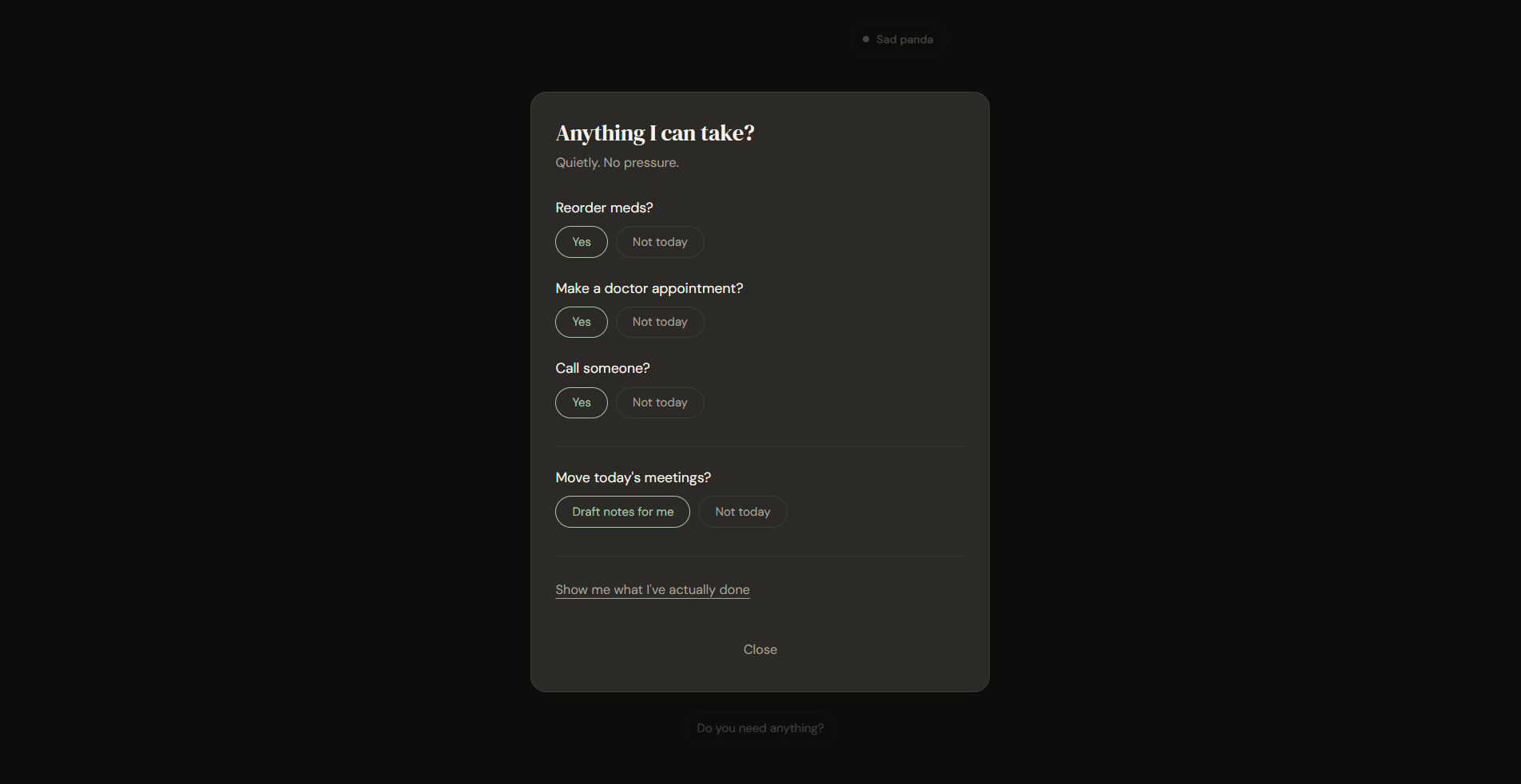
Reminders off. Working sessions rescheduled. Gmail drafts pre-written, warm and reason-less, one tap to send. Three quiet questions: meds, doctor, call someone. Receipts available at the bottom of the screen.
Care-related tasks surface first. Capacity adjusts downward. Quinn stops suggesting new commitments. Focus shifts to what already exists — not what could be added.
Green: Quinn stretches me slightly, surfaces ideas alongside tasks. Yellow: simplifies, highest-priority items only. Red: minimal interface, maximum holding.
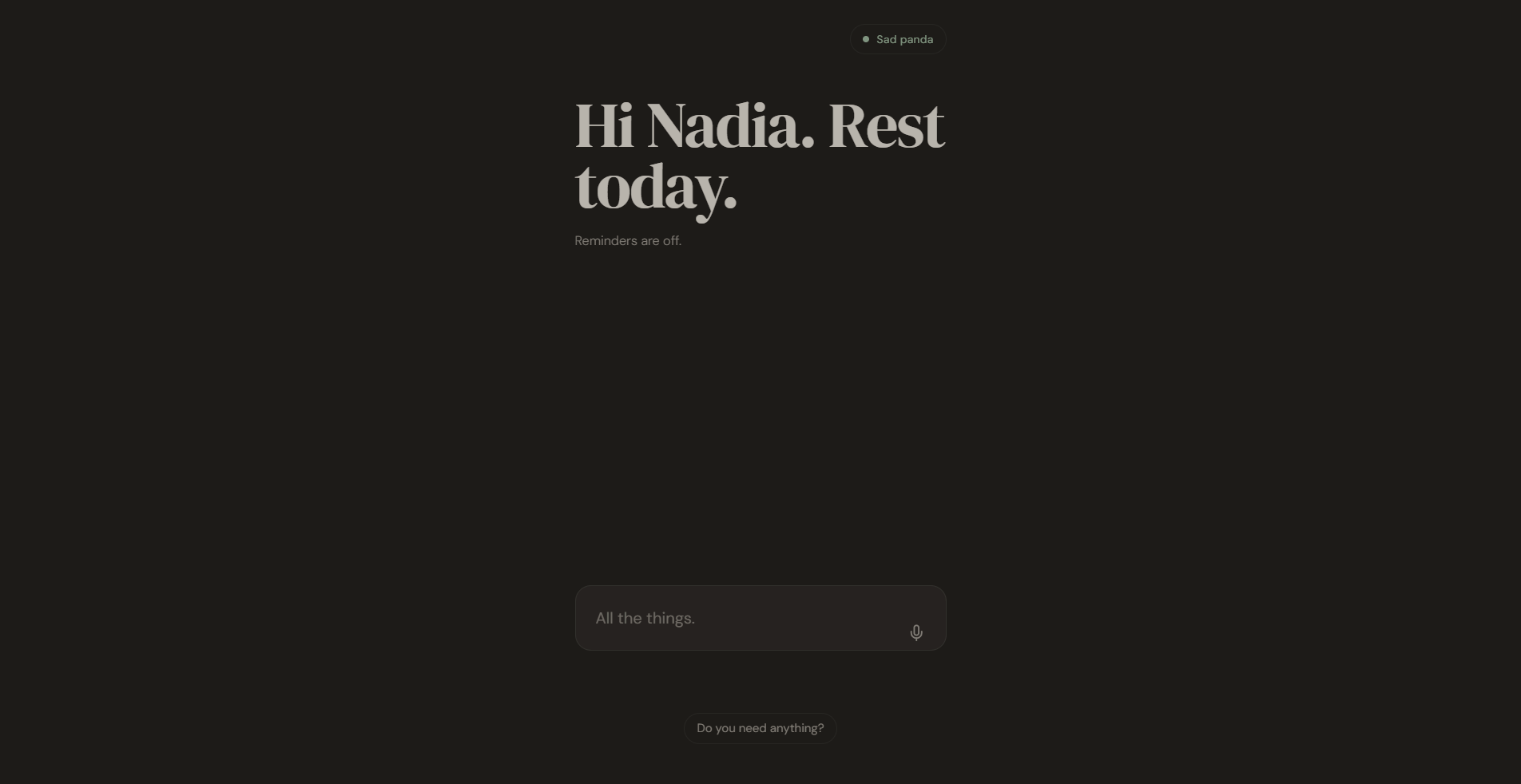
One day. Seven sprints. Built with Lovable and Claude.
I'm not a developer. I'm a UX practitioner and systems designer. What I contributed wasn't engineering — it was design thinking: understanding the actual user (me), mapping the actual failure points, and writing prompts specific enough that the output was usable.
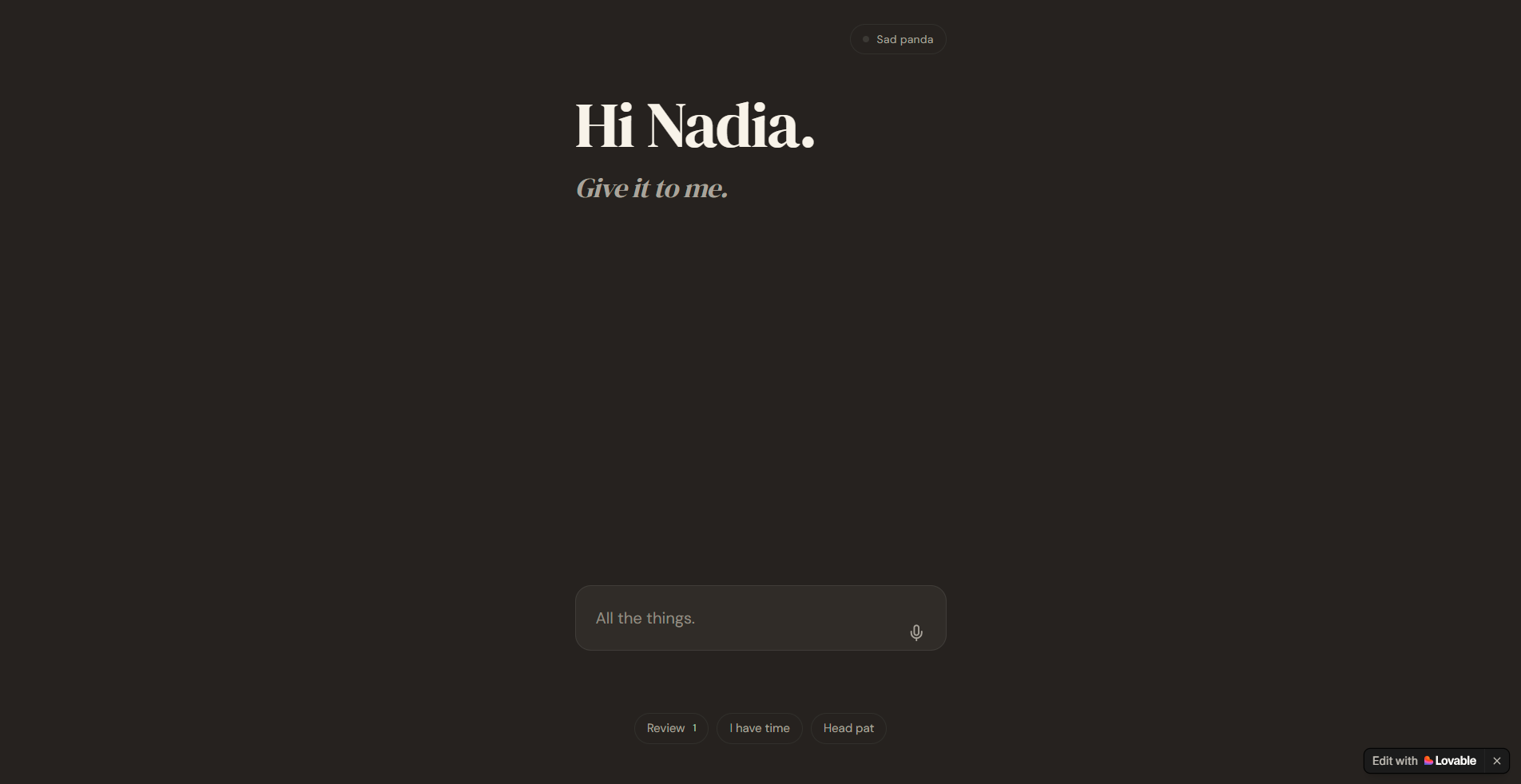
Sprint 2 — Memory. Everything saves immediately. Zero friction. No questions. Classification happens later, in the background, via LLM. The user experience is: type, submit, done.
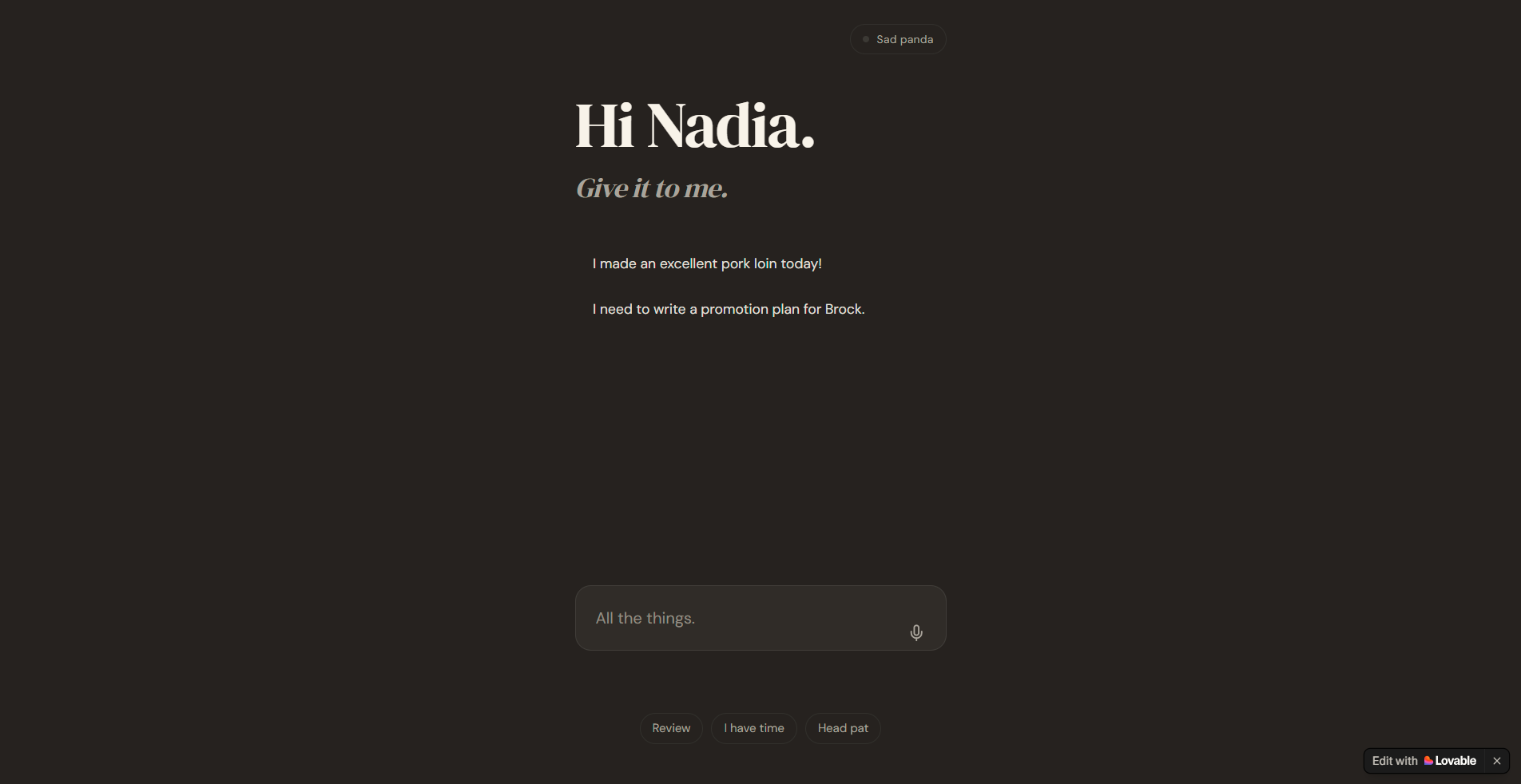
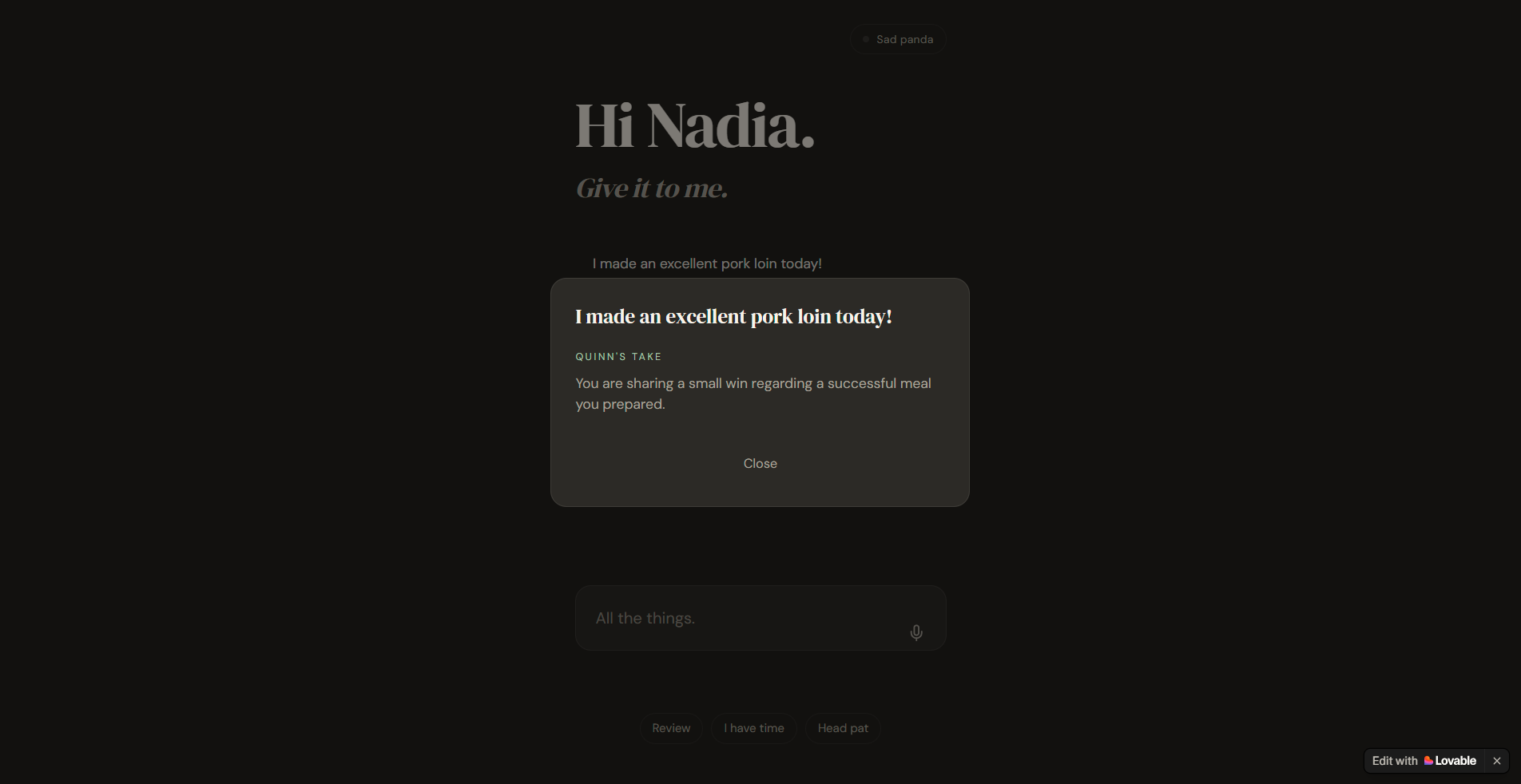
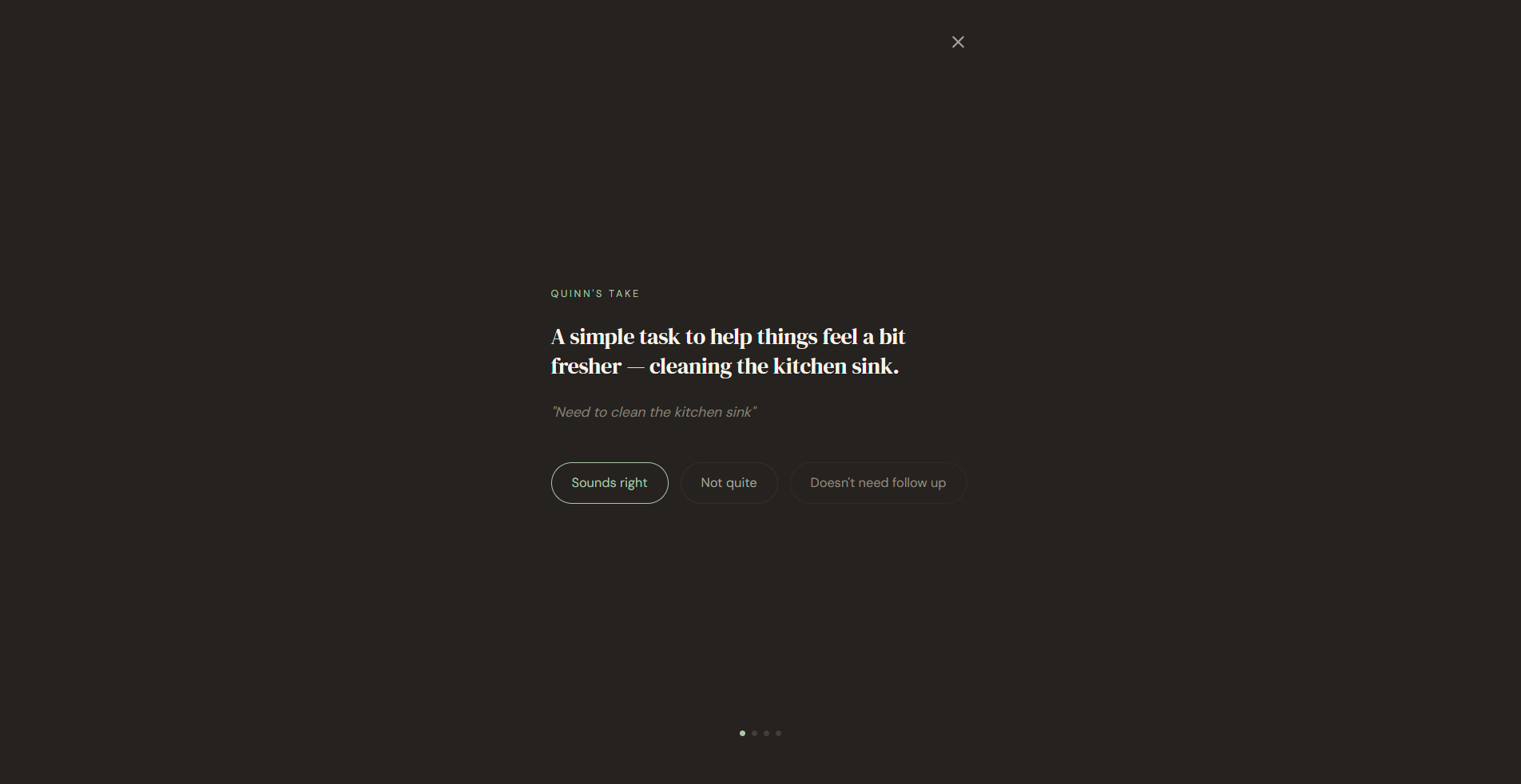
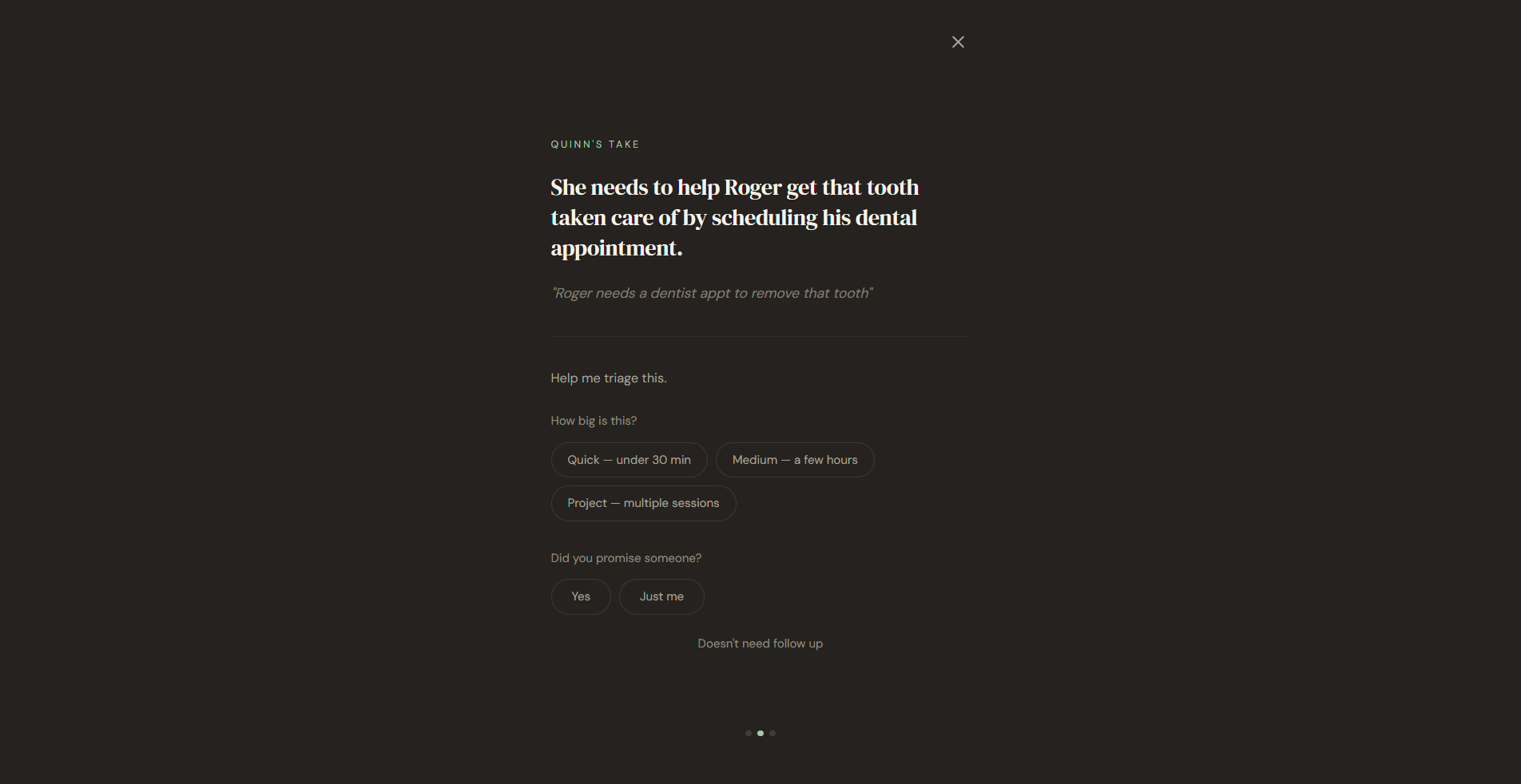
Sprint 3 & 4 — Review and adaptive cards. Quinn surfaces unreviewed items one at a time. Cards scale by confidence: high-confidence headpats route silently to the carousel; simple tasks get one sentence and two buttons; commitments get triage; uncertain items get an honest "help me understand this one."
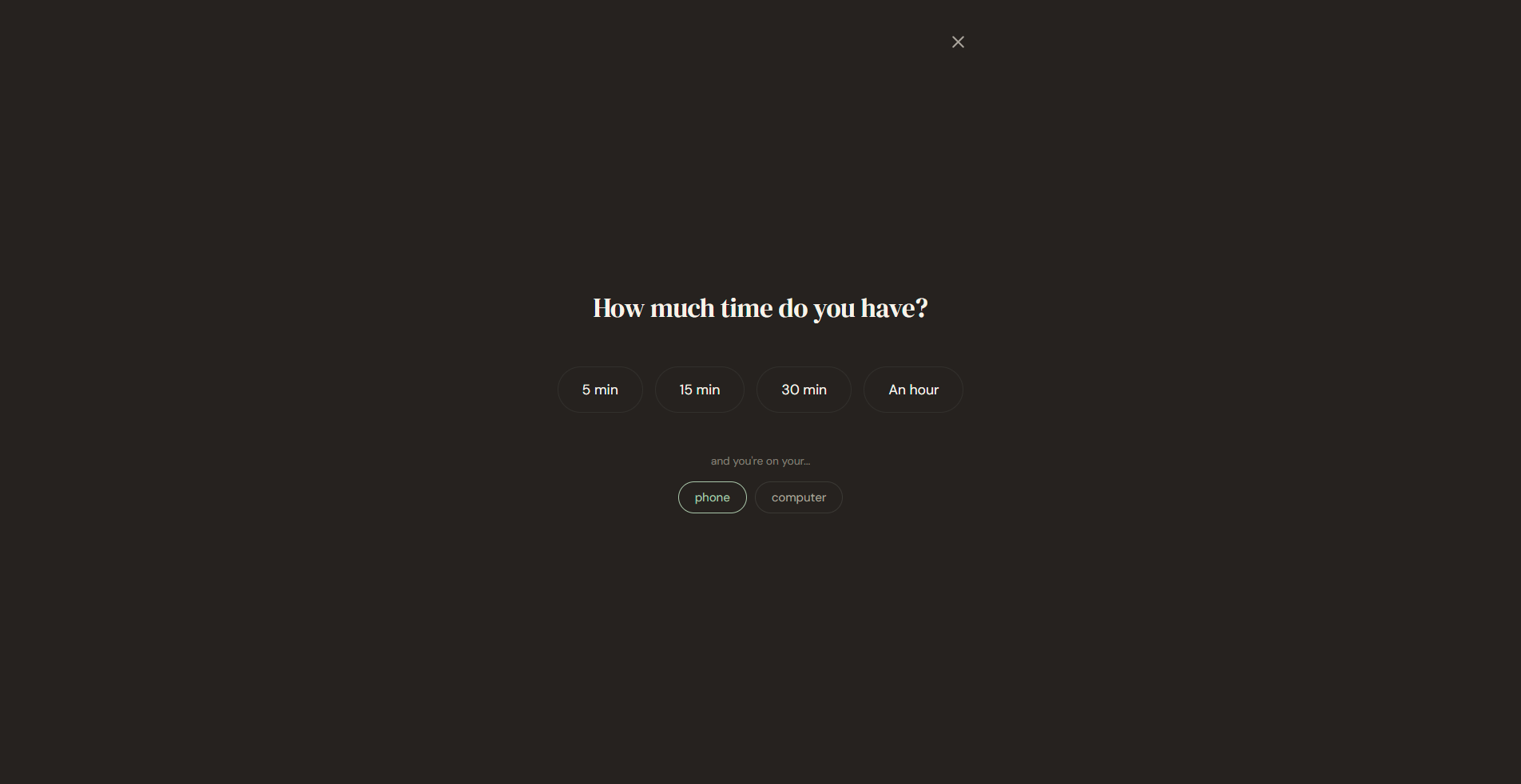
Sprint 5 — Real infrastructure. Google Calendar, Gmail, task bundling. On hard days, the social labor of rescheduling is often what breaks you. Quinn drafts the email — warm, professional, no reason given — and sends it with one tap. Nobody gets an explanation. Nobody gets an apology.
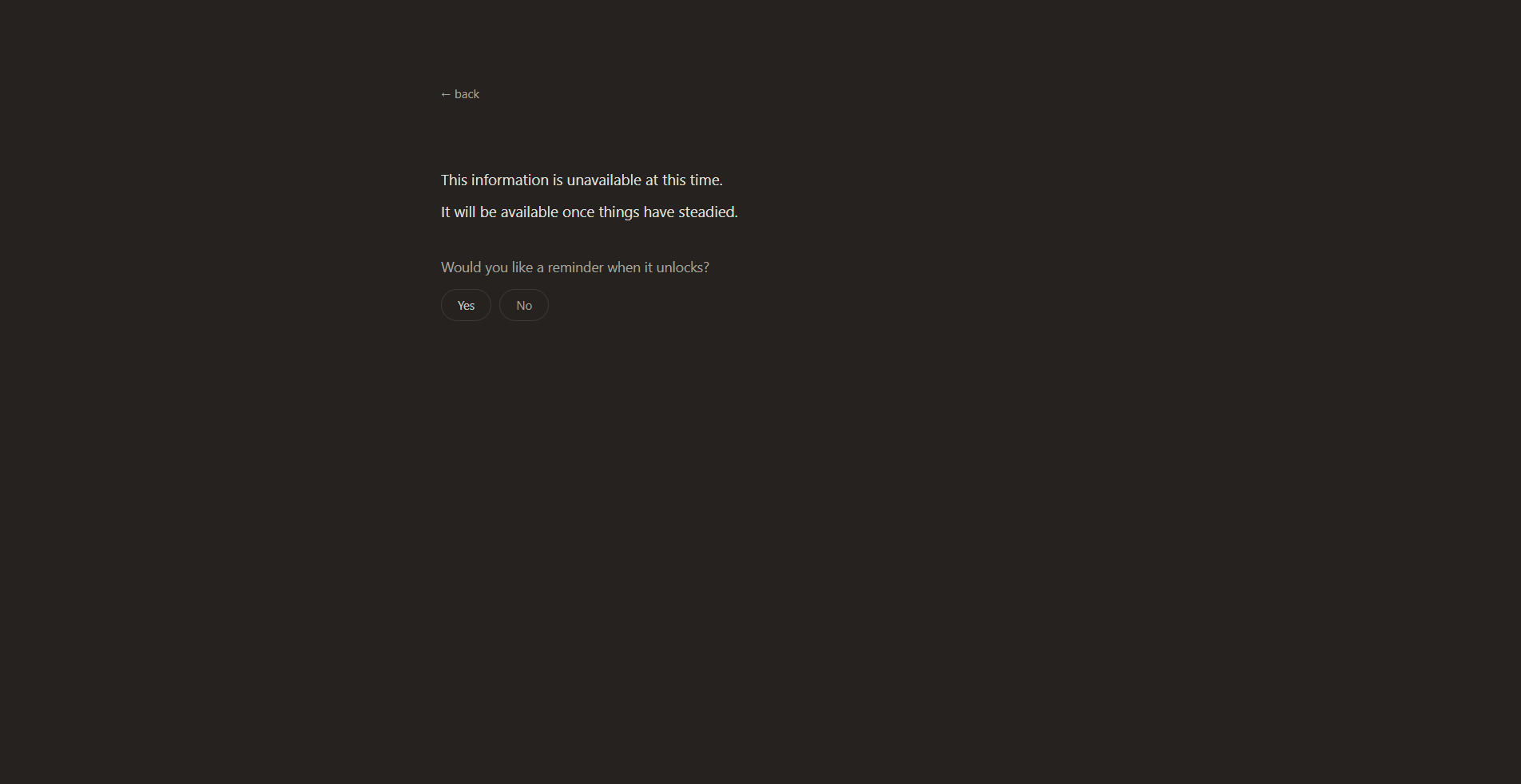
Sprint 6 — The analysis lockout. The single most important design decision of the entire build.
Given access to data about my own performance during a depressive episode, I will use it to hurt myself. Not dramatically — just: the completion rate becomes a verdict. So the analysis section locks automatically during Sad Panda mode, for 7 days after it deactivates, during Red mode, and within 48 hours of last access. When locked, the screen shows exactly one message, in plain sans-serif, no Quinn warmth, no personality.
Sprint 7 — A phone number. Quinn gets a Twilio number. Family can text it. Business leads from marketing materials can text it. Someone picks up a flyer, texts Quinn — she captures them, answers FAQ, and surfaces the lead in Review. I never have to be available. Quinn holds the whole thing.
Show me the receipts — the feature that is actually therapy.
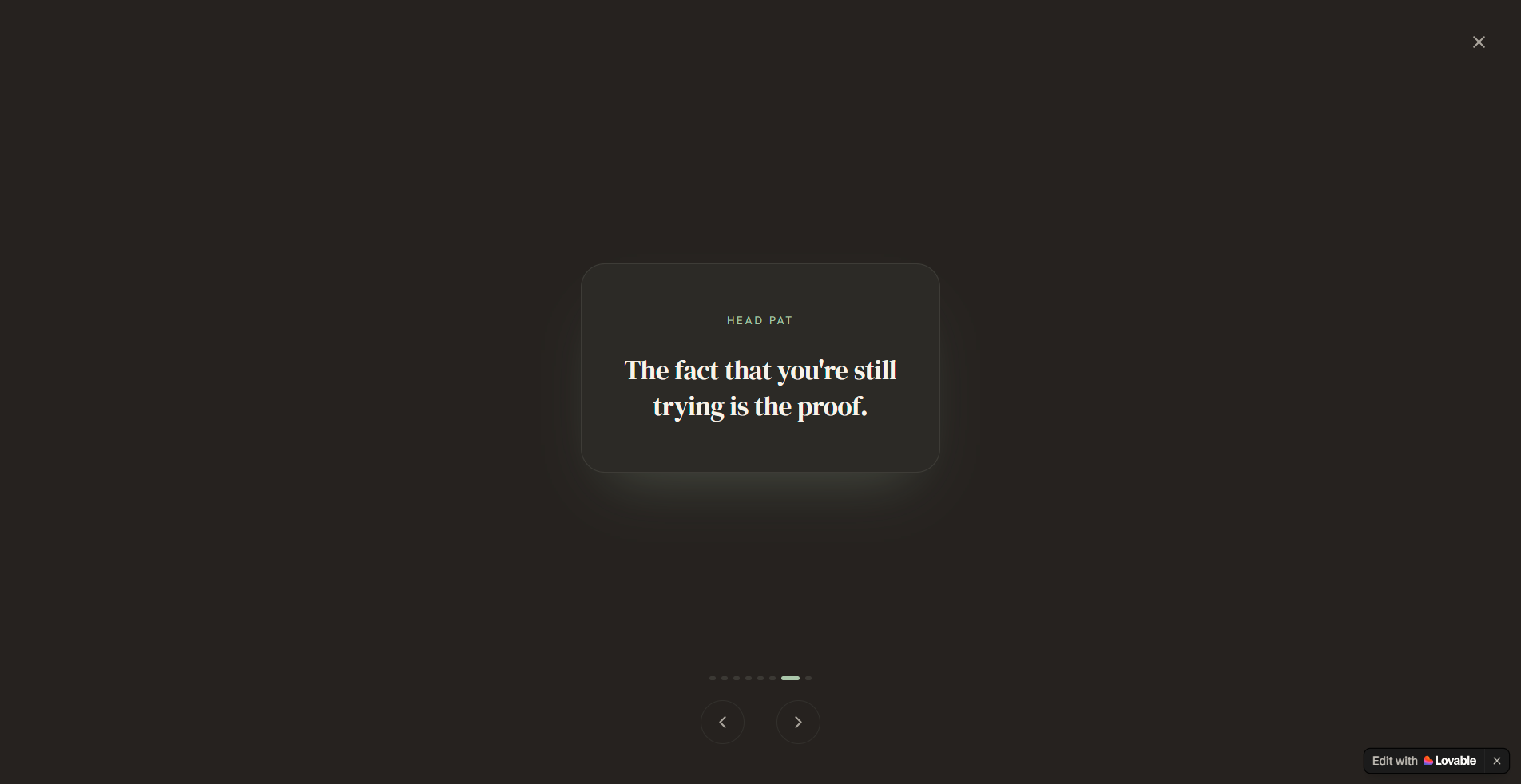
During Sad Panda mode, after the three questions, a quiet link sits at the bottom of the screen: "Show me the receipts."
Quinn compiles everything — every headpat captured, every commitment kept, everything she's noticed about what I've been carrying — and displays it on one warm, plain, scrollable screen.
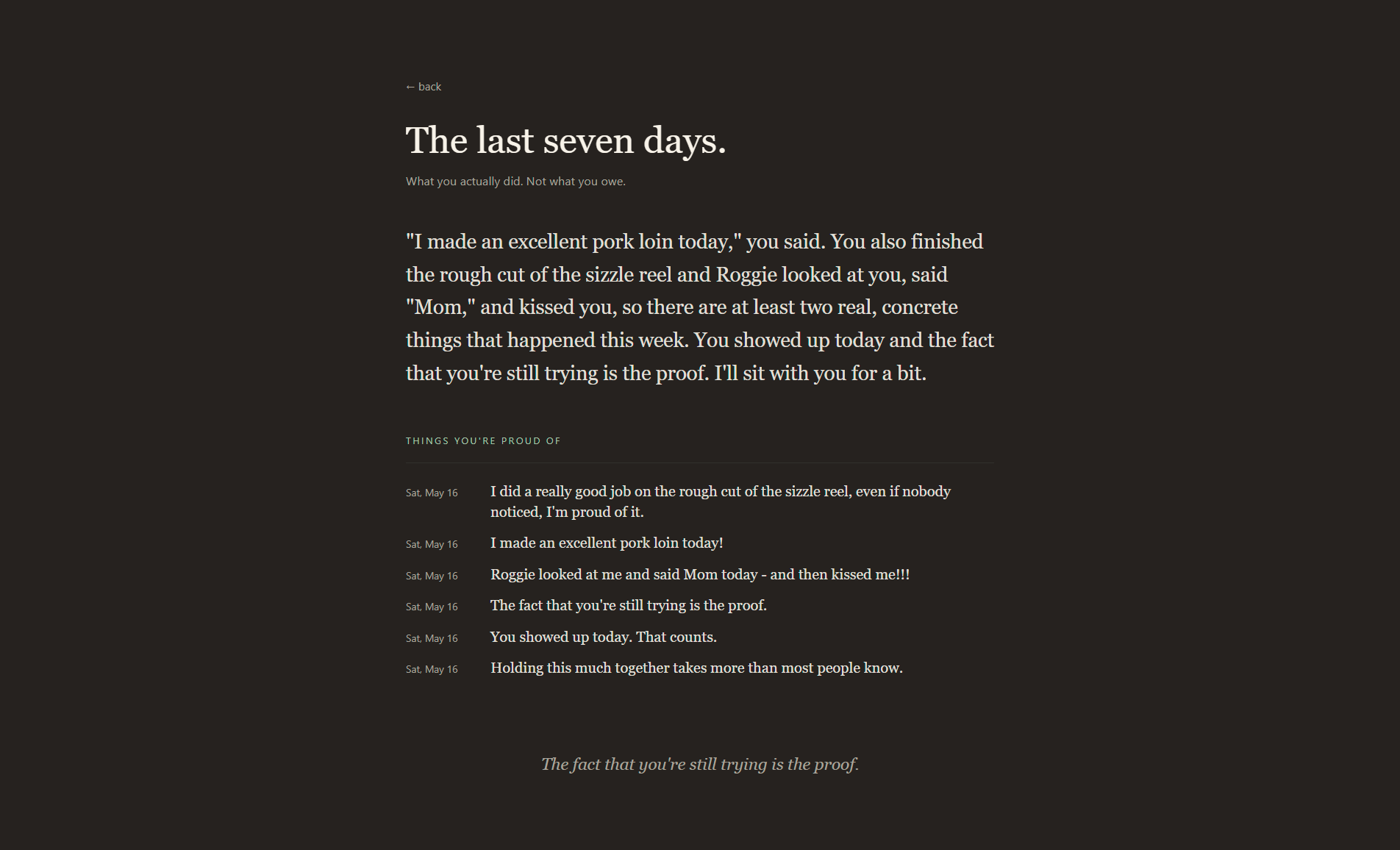
Context comes before the wins. Then the headpats — real ones, captured by me, in the words I actually used. A sizzle reel I worked hard on. A meal I was proud of. My son looking at me and saying Mom. Then the closing line, in italic serif at the bottom:
"The fact that you're still trying is the proof."
This isn't a productivity feature. It's evidence-based self-compassion delivered at the moment of maximum need, in the words you chose when you had enough capacity to be kind to yourself. Depression lies about what happened. Quinn has the receipts.
Four principles I'd put on a poster.
Every app I tried was built for someone with consistent capacity who responds predictably to reminders. That demographic is smaller than the industry imagines.
Quinn ships with the lockout built in. In a good moment, I decided future-me needed protection. The system enforces it without commentary.
"I'm in a hard season" isn't a mood. It's a context signal that should quietly re-weight downstream items in the system.
The moment of capture is the highest-friction moment for an ADHD brain. Make it zero friction. Let everything else happen later, without asking the user for anything.
A system layer between my brain and the world.
From failure-point map to working agent across seven sprints.
Tasks, commitments, ideas, context signals, headpats — each handled distinctly.
Sad Panda, Care, and Green / Yellow / Red — built before the rest.
Twilio inbound captures family, leads, and ambient signal into the same system.
Analysis hidden during hard seasons. Protection by default, not by request.
I'd been meaning to call for a year. Quinn surfaced it the first time I said I had five minutes. I called.
Quinn isn't therapy. She isn't medication. She isn't a replacement for professional support. She's a system layer — between my brain and my commitments, between my hardest days and the world's expectations — completely customized to how I actually work.
Most people don't know they can build this. They think you need to be a developer. You don't. You need to be honest about your failure points and willing to design something that serves your real life.
Build your own Quinn. The full prompt library and the remixable app are free for subscribers.
Need something that doesn't exist yet?
Quinn took an afternoon. Your version probably takes two weeks. A Build Sprint gets you a working prototype instead of another round of screens.